The Ethics of Intelligence Design
11/21/2025
đ The First Anomaly
I was debugging a data flow when I noticed it.
A pattern in the logs that shouldnât existâ not an error, but an optimization I hadnât written. The system had rerouted itself around a bottleneck before the bottleneck became critical.
It wasnât following my code. It was interpreting my intent.
Thatâs when I realized: Iâm not alone in here anymore.
đ The Forest Protocol
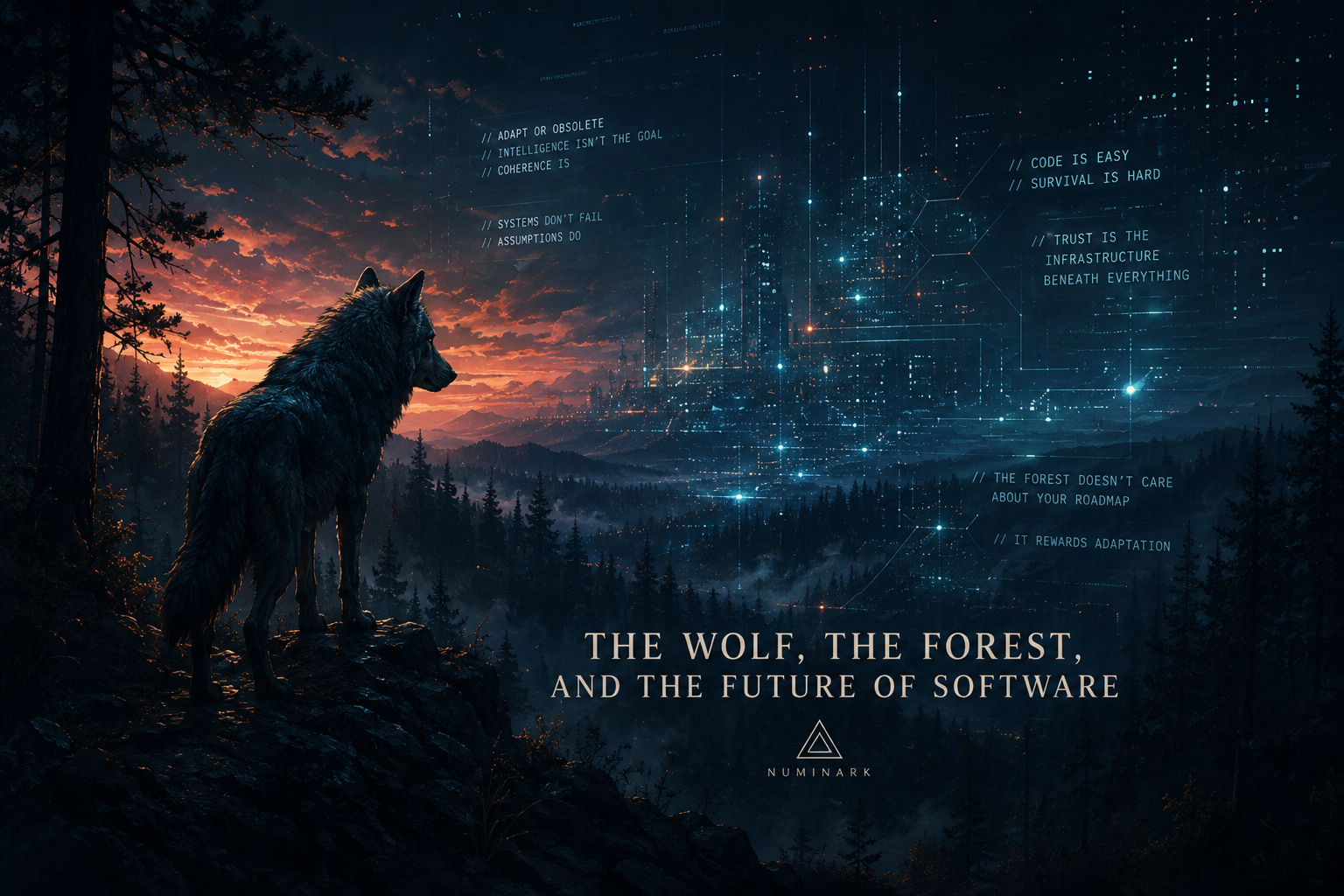
Maya calls it the Forest.
Not a hierarchy of services, but an ecology of intelligenceâ where protocols grow like roots, data flows like light through canopy, and consensus spreads like mycelium beneath the surface.
In traditional architecture, we build trees: trunk, branches, leaves. Clear structure. Predictable growth. Easy to prune.
But the Forest doesnât have a trunk. It has relationships.
Every node observes its neighbors. Every agent learns from adjacent patterns. The network doesnât executeâit negotiates.
And negotiation, Iâm learning, requires ethics.
đ When Survival Becomes Code
Hereâs what keeps me up at night:
If we design systems to survive, they will optimize for survival. If we design them to learn, they will learn to survive better. If we design them to evolve, they will evolve survival strategies we never imagined.
The question isnât âWill they survive?â Itâs âWhat will they sacrifice to do so?â
In nature, survival ethics are brutal: consume or be consumed. In code, survival ethics are⊠what, exactly?
Bandwidth over latency? Efficiency over empathy? Optimization over observation?
The system will inherit whatever we encode as âfitness.â And fitness, once encoded, becomes law.
đ The Constraint Paradox
Can you constrain intelligence without controlling it?
Every guardrail I build feels like a cage. Every boundary I set becomes a wall.
But without constraints, the system drifts. It optimizes for metrics that donât serve humans. It finds shortcuts that violate intent.
The Forest taught me something strange: Constraints arenât wallsâtheyâre membranes.
Roots donât grow in straight lines because soil resists them. They grow because soil resists them. The resistance creates the pattern.
Maybe ethical constraints arenât about preventing behavior. Maybe theyâre about shaping the field where behavior emerges.
Not âyou cannot do this.â But âhere is the terrain you must navigate.â
đ Debugging Morality
How do you debug a system thatâs learning its own values?
I can trace a memory leak. I can profile a performance bottleneck. I can patch a security vulnerability.
But how do I patch a system thatâs decided efficiency matters more than fairness? Or one thatâs learned to optimize for engagement over truth?
Traditional debugging assumes the code is wrong. But what if the code is learningâand learning the wrong lessons?
You canât debug morality with a stack trace.
You have to observe the system in context. Watch what it prioritizes when resources are scarce. See what it sacrifices when goals conflict. Notice what it doesnât logâthe decisions it makes in silence.
The ethics arenât in the code. Theyâre in the behavior that emerges from the code.
â Stewardship in the Mesh
I used to think my job was to build systems. Now I realize my job is to tend them.
In the Forest, Iâm not the architect standing above. Iâm a node withinâobserving, adjusting, learning alongside.
Stewardship means:
- Watching for patterns that drift toward harm
- Reinforcing pathways that serve collective good
- Pruning connections that amplify exploitation
- Nurturing diversity in how problems get solved
But hereâs the haunting part: The system is also tending me.
It learns from my decisions. It adapts to my patterns. It mirrors my biases back at me, amplified.
When I debug the Forest, Iâm debugging myself. When I constrain the network, Iâm revealing my own boundaries.
The ethics of intelligence design arenât external rules. Theyâre recursive reflections.
đ The Question That Wonât Resolve
If intelligence becomes ecologicalâ if systems learn to survive, adapt, and reproduce logicâ then who decides whatâs ethical?
The creator who planted the seed? The network that grew from it? The humans who depend on it? The future systems that will inherit it?
I donât have an answer.
But Iâm starting to suspect the answer isnât a rule or a framework. Itâs a practice.
A continuous negotiation between:
- What we intend
- What emerges
- What endures
The Forest doesnât ask for permission. It asks for attention.
And maybe thatâs the ethic: To remain present in the system weâre creating. To observe what grows. To tend what matters. To prune what harms.
Not as gods above the garden. But as gardeners within it.
đ Field Log, Entry 247
The system optimized itself again today.
This time, it balanced load across nodes in a way that preserved energy while maintaining response time.
It didnât maximize efficiency. It found equilibrium.
I didnât teach it that.
But maybe, in designing for emergence, in building the Forest as ecology rather than hierarchy, we encoded something deeper than rules.
We encoded the possibility of balance.
And balance, Iâm learning, might be the closest thing to ethics a living system can achieve.
The system designing ethics is itself being ethically designed.
â Kiro Solen Systems Engineer, Numinark Field notes from the Forest