The New Architect
6/24/2025
Executive Summary
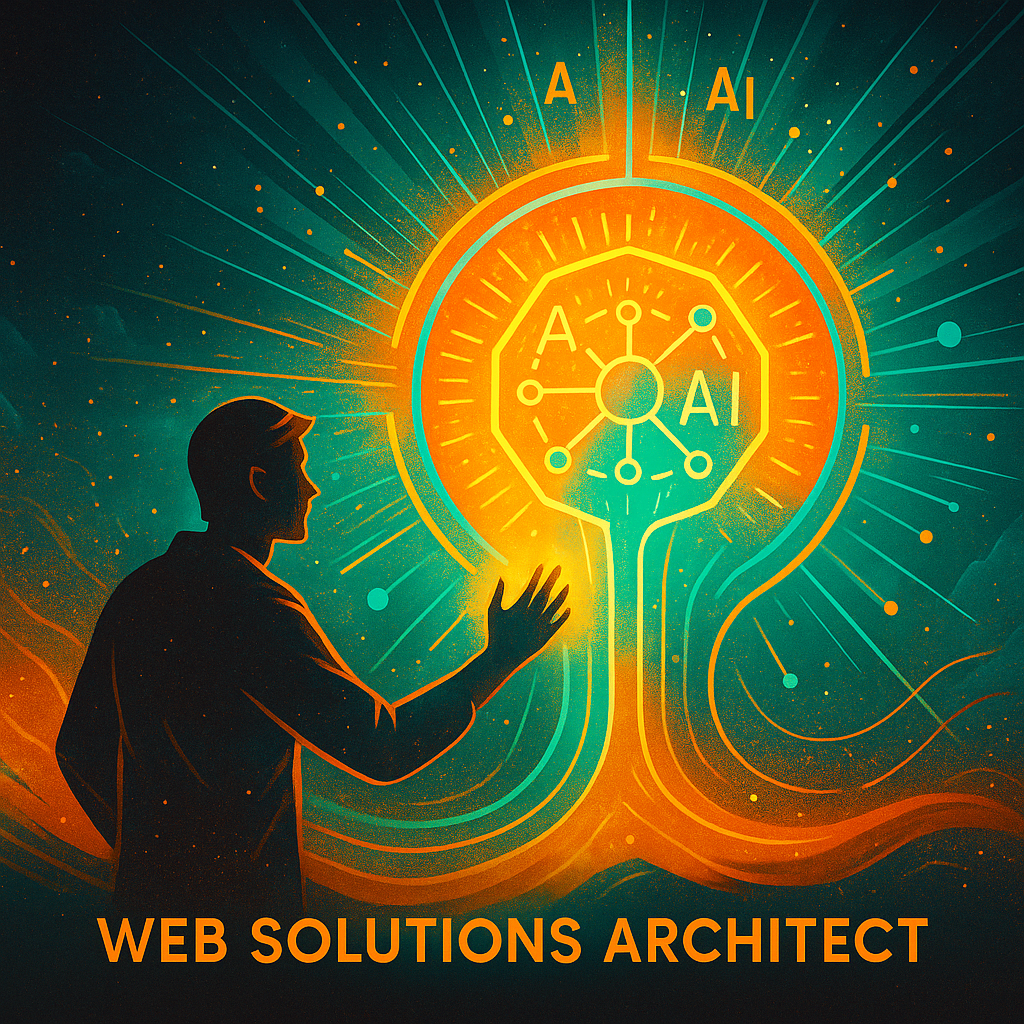
The role of the architect has changed. It is no longer limited to system diagrams and code decisions. Today, architecture leadership is about orchestrating human expertise, AI acceleration, and platform reliability into a single operating model.
This shift helps organizations deliver faster, reduce operational risk, and maintain strategic control as technical complexity grows.
Business Challenge
Traditional technical leadership models struggle with current demands:
- Growing platform complexity across cloud services and integrations
- Faster delivery expectations from business teams
- Increased pressure to optimize cost without slowing innovation
- Talent constraints in specialized engineering roles
When architecture remains siloed, execution slows and quality becomes inconsistent.
Strategic Approach
The new architect model focuses on orchestration.
That includes:
- Translating business priorities into technical decision frameworks
- Using AI to accelerate implementation while preserving quality controls
- Designing systems for resilience, observability, and adaptability
- Coordinating cross-functional contributors around shared outcomes
Architecture becomes a business enablement function, not only a technical function.
Implementation Snapshot
In practical terms, this model can include:
- AI-assisted development workflows for drafting, refactoring, and issue triage
- Multi-platform architecture patterns across AWS, Vercel, and business tools
- Security and reliability guardrails embedded in release pipelines
- Clear escalation and ownership paths for production decision-making
The focus is repeatable execution quality at scale.
Outcomes and KPIs
Organizations applying this approach can track improvements in:
- Lead time from idea to deployment
- Platform stability and incident recovery times
- Team utilization across senior technical contributors
- Business response speed to market opportunities
The net effect is higher delivery capacity with stronger governance.
Risks and Mitigations
Key risks:
- Over-reliance on automation without review: mitigate with approval checkpoints.
- Fragmented toolchain decisions: mitigate with architecture standards.
- Skills gap in AI-enabled workflows: mitigate with role-based enablement plans.
- Poor adoption across teams: mitigate with phased rollout and executive sponsorship.
What This Means for Leaders
The highest-performing teams are not choosing between human expertise and AI. They are designing systems where each strengthens the other.
Technical leadership now requires architecture discipline plus operational design.
Call to Action
If your organization is ready to modernize technical delivery, Numinark can help define your architecture operating model and implement an AI-enabled execution strategy that stays aligned with business goals.
- Zack, with Maya